Your bays are good, your techs are solid, but the phone keeps bringing price shoppers while the shop down the road stays booked. That gap usually isn't about repair quality. It's about what a driver sees in the few seconds after searching for help, and whether your shop makes the next step easy. Effective local SEO for auto repair shops connects that search to a call, a booking, and a finished repair order.
Table of Contents
- Why Most Auto Repair Shops Lose Local Search Jobs
- Auditing and Optimizing Your Google Business Profile
- Building Service and Location Pages That Match Real Searches
- Local Schema, NAP Consistency, and Core Citations
- Running Reviews as a Service Recovery System
- Local Link Building and Partnerships That Fit a Garage
- Tracking KPIs and Connecting SEO to Booked Repair Orders
Why Most Auto Repair Shops Lose Local Search Jobs
A driver hears grinding when she brakes on the way to work. She pulls into a lot, searches brake repair near me on her phone, and compares three shops. One has current hours, clear services, recent photos, and a tap to call button. Another has an old phone number, no brake page, and reviews nobody has answered in months. She doesn't run a fair test of either garage. She picks the one that looks open, nearby, and able to fix the problem today.
That quick decision is normal local behavior. In a Google study of 653 participants, four in five consumers used search engines to find local information, and 50% of people who did a local search on a smartphone visited a store within one day, according to Google research on local search behavior. The same research found 18% of smartphone local searches led to a purchase within one day, compared with 7% for non-local searches.
The Market Is Big, but the Choice Is Local
General automotive repair firms generated $62.630 billion in revenue in 2022, based on Federal Census data reported through the Federal Reserve Bank of St. Louis. That scale doesn't help a shop that isn't visible in its own service area. Customers rarely drive across a metro for an oil change, and they won't wait for a slow site when a check engine light is on.
Most shops lose jobs in three separate places. They don't show up, they show up but don't earn trust, or they earn the click and then lose the booking. Rankings, calls, and completed repair orders are different problems. Fixing only one leaves money on the table.
A website proves you exist. A complete local presence gives a stressed driver a reason to choose you and a fast way to book.
Auditing and Optimizing Your Google Business Profile
Start with your Google Business Profile, because it's often the first full view a customer gets of your shop. Google says local rankings are mainly shaped by relevance, distance, and prominence, and businesses can't pay for a better organic local position, as explained in Google guidance on local ranking factors. You can't control where the searcher is standing. You can control whether your profile matches the job and looks trustworthy.
Use the checklist below during a quiet afternoon at the counter.
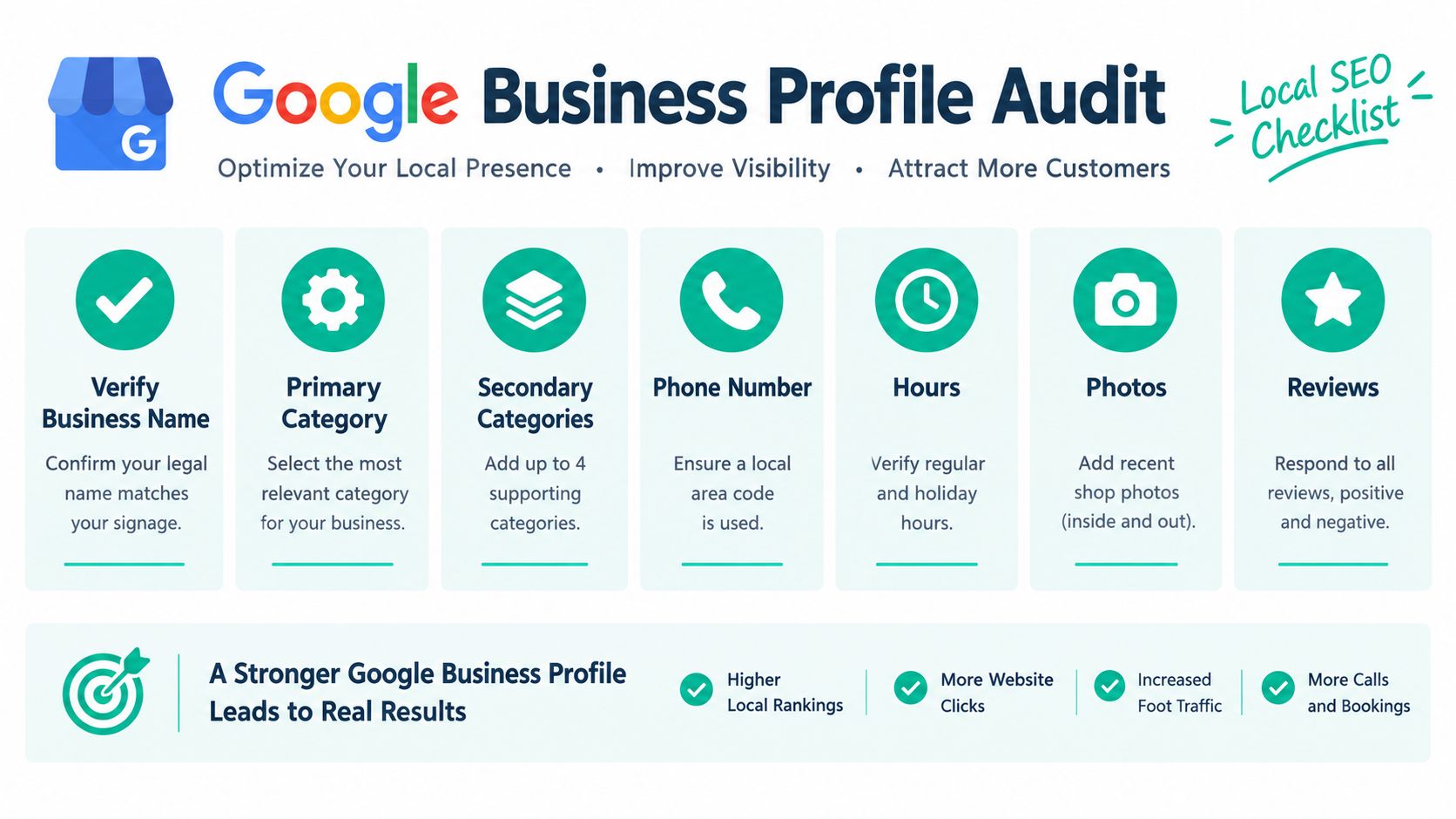
Fields to Verify First
- Legal business name: Match your signage and paperwork. Don't stuff in city names or services.
- Primary category: Pick the category that best fits the shop, then add honest secondary categories for specialties.
- Address and phone: Use the storefront address and a number your team answers.
- Hours: Check regular hours, holiday hours, and early drop-off notes if you offer them.
- Services and appointment URL: List services you perform and link to a booking page that works on a phone.
- Photos and access: Add current exterior, bay, lift, and team photos. Confirm who owns the profile so access isn't trapped in a former employee's account.
Each field feeds a practical decision. Categories and services support relevance. Reviews, links, and web references support prominence. Distance still depends on the searcher, which is why chasing far-off rankings with fake locations wastes time.
Storefront, Service Area, or Both
Some shops are hybrid businesses. They run a physical garage and also dispatch roadside help. Google allows a hybrid shop to show its address and set a service area if the location is staffed and can receive customers during stated hours, and the service area generally shouldn't extend beyond about two hours of driving time, per Google rules for service-area and hybrid businesses.
List nearby communities you serve. Don't claim a huge territory just to appear in more searches. A driver two hours away isn't a good roadside customer, and a misleading setup creates calls your team can't serve well.
Building Service and Location Pages That Match Real Searches
One generic services page asks one URL to rank for brakes, diagnostics, tires, oil changes, and transmissions. It usually does a weak job for all of them. Build a dedicated page for each service that brings profitable, repeatable work.
The photo below shows the kind of real shop detail customers expect to see matched with clear service information.
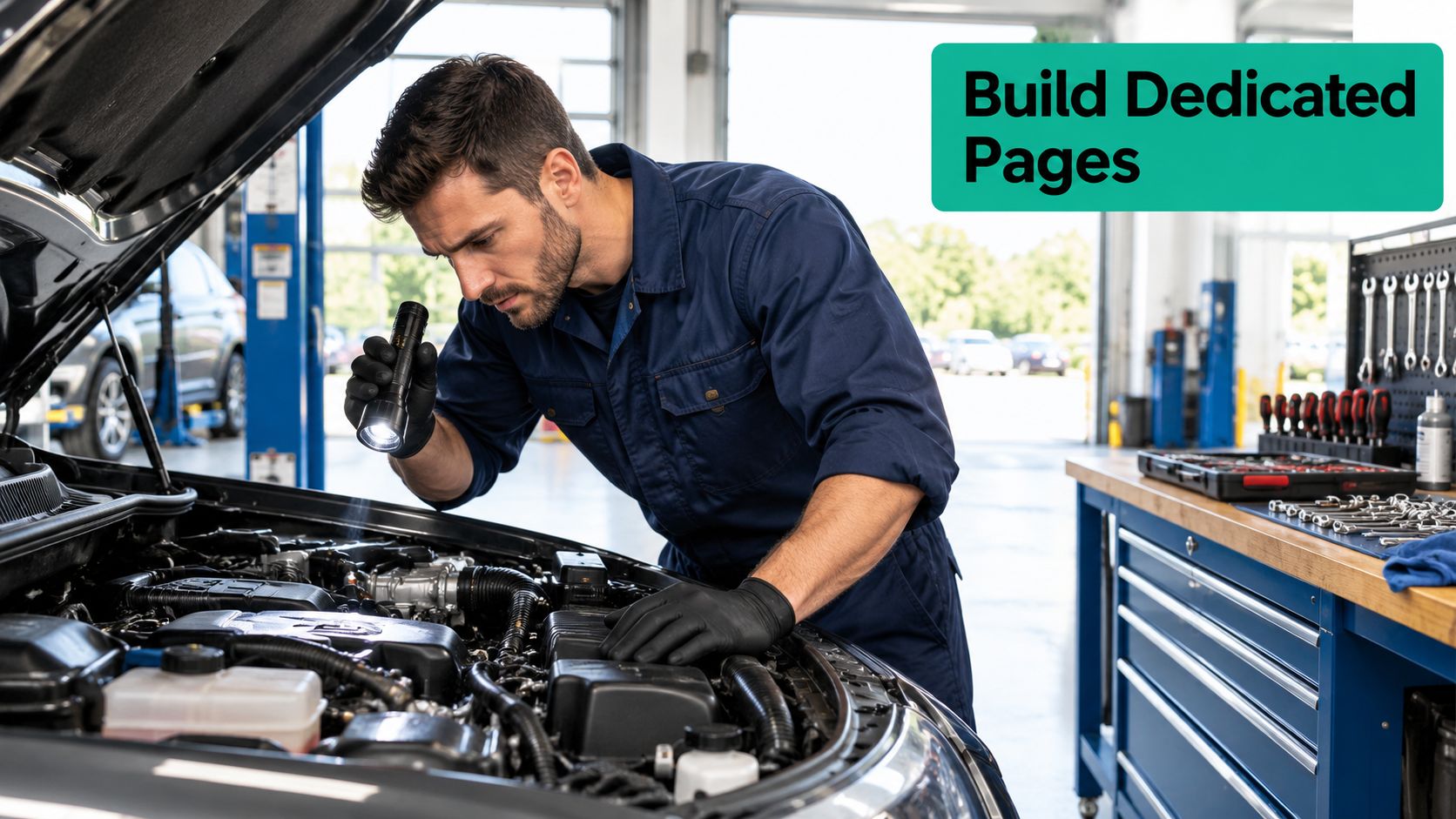
What a Strong Service Page Includes
A brake page should name common symptoms, explain your inspection, separate pads, rotors, and calipers in plain language, and state your warranty clearly. A diagnostics page should explain why a code isn't a full diagnosis and how your fee works. An oil change page should cover oil types, inspection checks, and whether you take walk-ins.
Put the essentials near the top. Show the service, city, phone number, hours, and booking option before long educational copy. A customer with a hot brake caliper doesn't want a history lesson first. The page layout should support fast loading and easy tapping, which is why SEO-friendly website design matters as much as the words on the page.
Watch the walkthrough below for a practical look at how service pages support local visibility.
When a City Page Makes Sense
Add a location page only when you regularly serve that area and can write something truthful and useful about it. Mention pickup options, towing partners, common commuter needs, or a nearby second location if you have one. Don't copy the same page and swap the city name twenty times.
Use a simple test before publishing. Do customers from that area already book with you, can your team serve them without strain, and does the page answer a local need your main service page doesn't? If the answer is no, improve the core service page instead.
Local Schema, NAP Consistency, and Core Citations
Search engines need clean facts, not guesses. Schema is structured code that labels your business details in a format Google can read. NAP consistency means using the same name, address, and phone number everywhere your shop appears. Together, they reduce confusion when old listings, supplier pages, and directories describe your shop in different ways.
The flow below shows the basic order for a single-location shop.
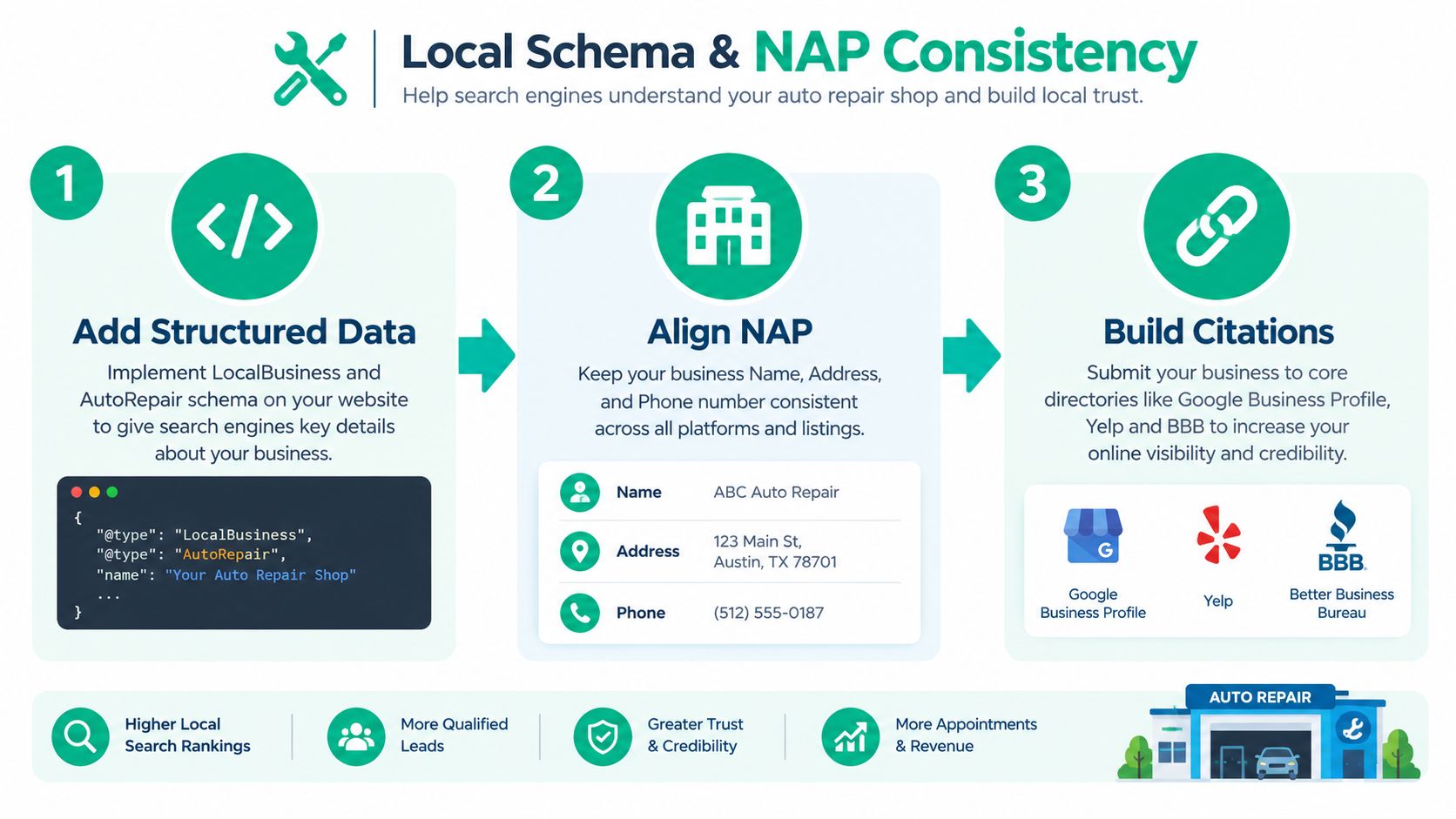
Add and Validate LocalBusiness Markup
Use LocalBusiness or AutoRepair structured data with your physical address, geographic coordinates, hours, telephone number, URL, and service details. Validate the markup with Rich Results Test, check rendering in URL Inspection, fix critical errors, and submit an updated sitemap. Don't mark up services you don't offer or hide details in code that customers can't see on the page.
Then compare your website footer, contact page, profile, and major listings. Fix suite numbers, old phone numbers, abbreviations, and former business names. Small mismatches are common after a move, a rebrand, or a change in call tracking.
| Citation Source | Why It Matters | Action |
|---|---|---|
| Google Business Profile | Anchors Maps and local search visibility | Claim, verify, and update all core fields |
| Yelp | Customers often compare repair shops and reviews there | Match NAP, categories, hours, and photos |
| BBB | Supports trust checks for higher-cost repairs | Confirm listing details and respond to inquiries |
| AAA or supplier directories | Shows approved or affiliated status where applicable | Claim only if you're an active participant |
| Local chamber of commerce | Confirms a real community presence | Keep membership and contact details current |
Run this audit each quarter. Check for duplicate listings, closed-location pages, and franchise or supplier pages that still show old details. One careful cleanup is more useful than submitting to every low-quality directory you can find.
Running Reviews as a Service Recovery System
A review request sent at pickup sounds simple. The hard part is what happens after a customer mentions a price dispute, a warranty concern, or a repair that didn't fix the noise. That's where reviews stop being a star count and become a service recovery system.
Ask every real customer in a neutral way after the job is complete. Send the request through the channel they prefer, and don't coach them to use phrases like best auto repair near me. Specific, honest detail about the vehicle problem, communication, turnaround, and warranty handling helps the next customer judge fit. It also supports a basic understanding of what customer reviews do for trust and choice without turning feedback into an ad.
Respond Without Exposing Private Details
Set a clear response SLA so reviews don't sit unanswered. Survey reporting found 89% of consumers would use a business that responds to all reviews, compared with 44% for a business that does not respond, according to BrightLocal consumer review research. That same source notes 40% of respondents use at least two review sites on average, so monitor Google and at least one other platform.
For a tough review, thank the customer, acknowledge the concern, and invite direct contact. Don't publish license plate details, repair costs, payment disputes, or private vehicle history to win an argument in public. Move the facts to a phone call or service desk conversation.
Response rule: Be specific about your process, vague about private customer details, and clear about the next step.
Freshness and detail matter too. In consumer survey findings, 67% of respondents said they always or often read reviews, and 97% continued researching after finding a business, based on RepairShopWebsites consumer behavior survey insights. Recent reviews that describe real jobs answer that extra research better than a pile of old, generic praise.
Stay inside the rules. The Federal Trade Commission final rule announced in August 2024 prohibits buying, selling, creating, or distributing fake reviews and testimonials, as stated in the FTC announcement banning fake reviews. Don't buy reviews, gate unhappy customers, offer rewards for positive sentiment, or ask employees to pose as customers. Track requests sent, delivery rate, review conversion, rating mix, response time, repeat complaint themes, and booked jobs by source.
Local Link Building and Partnerships That Fit a Garage
Good local links usually come from real relationships, not link packages. A shop already works with parts suppliers, towing companies, fleet accounts, schools, charities, and nearby businesses. Those connections can earn mentions that make sense to customers and to Google.
This kind of community partnership is a natural fit for a neighborhood garage.
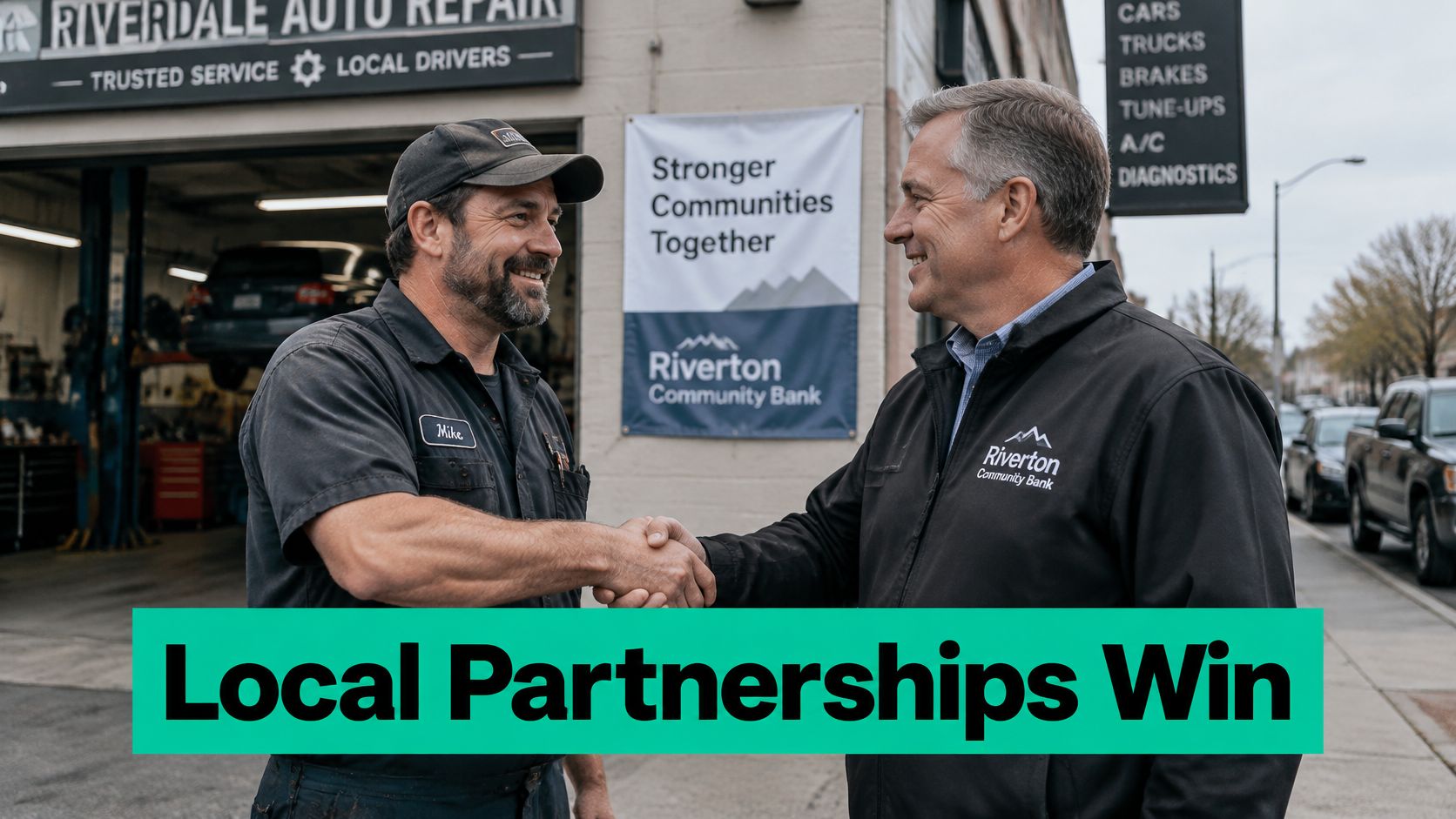
Start close to the shop. Sponsor a youth team and ask to be listed on the booster page. Host a free car care clinic with a parts supplier and share the event with local groups. Ask a towing partner to list you as a repair destination if that's how you already work together.
Supplier and approval programs can also help. If you're part of a network such as NAPA AutoCare or you're AAA approved, check that the directory listing is live, accurate, and linked to the right location page. Those links carry trust because customers recognize the names. Keep your outreach clean and documented by following white-hat link building practices instead of buying placements.
A Simple Outreach Habit
- Name the relationship: Explain the event, sponsorship, or referral arrangement in plain terms.
- Make linking easy: Send your correct business name, short description, logo, and the exact page URL.
- Track the result: Record the source, contact, date, live URL, and whether the NAP details are correct.
Skip blog comment links, irrelevant directories, and sites that sell links to any business. They don't prove local prominence, and cleaning them up later takes time your service advisor doesn't have.
Tracking KPIs and Connecting SEO to Booked Repair Orders
A ranking report can look great while the schedule stays thin. That's why local SEO for auto repair shops should be judged by completed repair orders, not clicks alone. Separate discovery from conversion, then connect both to revenue you can verify in your shop system.
Separate Discovery From Conversion
Discovery tells you whether nearby drivers can find you. Track Map Pack visibility, non-branded impressions, profile views, search terms, and visibility across a fixed grid of target ZIP codes. Keep Map Pack results separate from regular organic rankings, because they answer different searches and change for different reasons.
Conversion tells you whether visibility turned into work. Track profile calls, website clicks, direction requests, booking starts, completed bookings, no-shows, booked repair orders, and average ticket where your system allows it. If a brake page gets calls but few bookings, check price clarity, phone coverage, slot availability, and follow-up speed before rewriting the page.
Clicks don't pay a tech. Booked, completed, and paid repair orders do.
Use call tracking carefully so you can tell whether a call came from the profile, a service page, or another campaign. Keep your main listed number consistent in citations, and use tracking numbers in ways that don't create NAP confusion. Add a required source field in your CRM or shop management notes so the service advisor records how the customer found you.
Fix the Booking Step, Not Just the Ranking
Many shops win the search and lose the appointment. Repair industry reporting says more than 60% of shops in the USA now offer online booking or digital communication, up from 33% in recent years, and 60% of Americans prefer booking appointments online versus 33% who prefer calling, according to Ratchet+Wrench reporting on shop technology. That doesn't mean every job should be self-booked.
Oil changes, tire rotations, and inspections fit online scheduling well. Intermittent electrical faults, transmission symptoms, and no-start diagnostics need triage first. Use a hybrid flow for those jobs. Ask structured intake questions, show that a person will confirm the slot, and follow up fast during business hours. A booking tool that overfills the day or books the wrong bay creates friction for techs and customers.
A 30, 60, 90 Day Plan
First 30 days, foundation. Audit the profile, fix NAP errors, confirm hours and service area settings, add current photos, and set up the review request and response routine. Connect call, form, and booking tracking before you judge performance.
Days 31 to 60, build. Publish or improve priority service pages, add and validate schema, clean core citations, and earn your first partnership links. Choose services by margin, bay capacity, and local demand, not by keyword lists alone.
Days 61 to 90, improve. Review ZIP grid visibility, booking completion, no-shows, review topics, and repair order value by source. Expand a city page only if real bookings support it. Cut pages or campaigns that bring calls your shop can't serve.
Common Questions After the First Month
Can a garage also list a service area? Yes, if it's a genuine hybrid setup with a staffed storefront that receives customers during listed hours. Keep the area realistic and based on work you perform.
Should every service use online booking? No. Let customers book simple maintenance directly, and route complex diagnostics through intake plus human confirmation. Match the flow to service complexity and shop capacity.
Can we ask happy customers only for reviews? No. Ask real customers neutrally, accept honest feedback, respond to all of it, and fix repeat problems in the shop. That's safer for compliance and better for trust.
Review the numbers monthly with the owner, service advisor, and whoever manages marketing. Bring one page of discovery data, one page of conversion data, and a short list of operational fixes. If a metric can't change a staffing, content, booking, or service decision, it's probably a vanity metric.
If your shop is getting found but not getting booked, Assertive Agency can audit your profile, service pages, citations, reviews, and booking path as one connected local SEO program. We'll tie the work to calls, completed bookings, and repair orders in the USA market instead of reporting rankings alone. Start the conversation at Assertive Agency and ask for a local search review built around your bays, capacity, and service mix.