You're staring at a product page, a Google listing, or a local service profile, and the same question keeps popping up, can I trust this business? That's where customer reviews come in. They're the shortcuts people use when they can't inspect a product in person, can't watch a service happen, and don't want to gamble on a purchase.
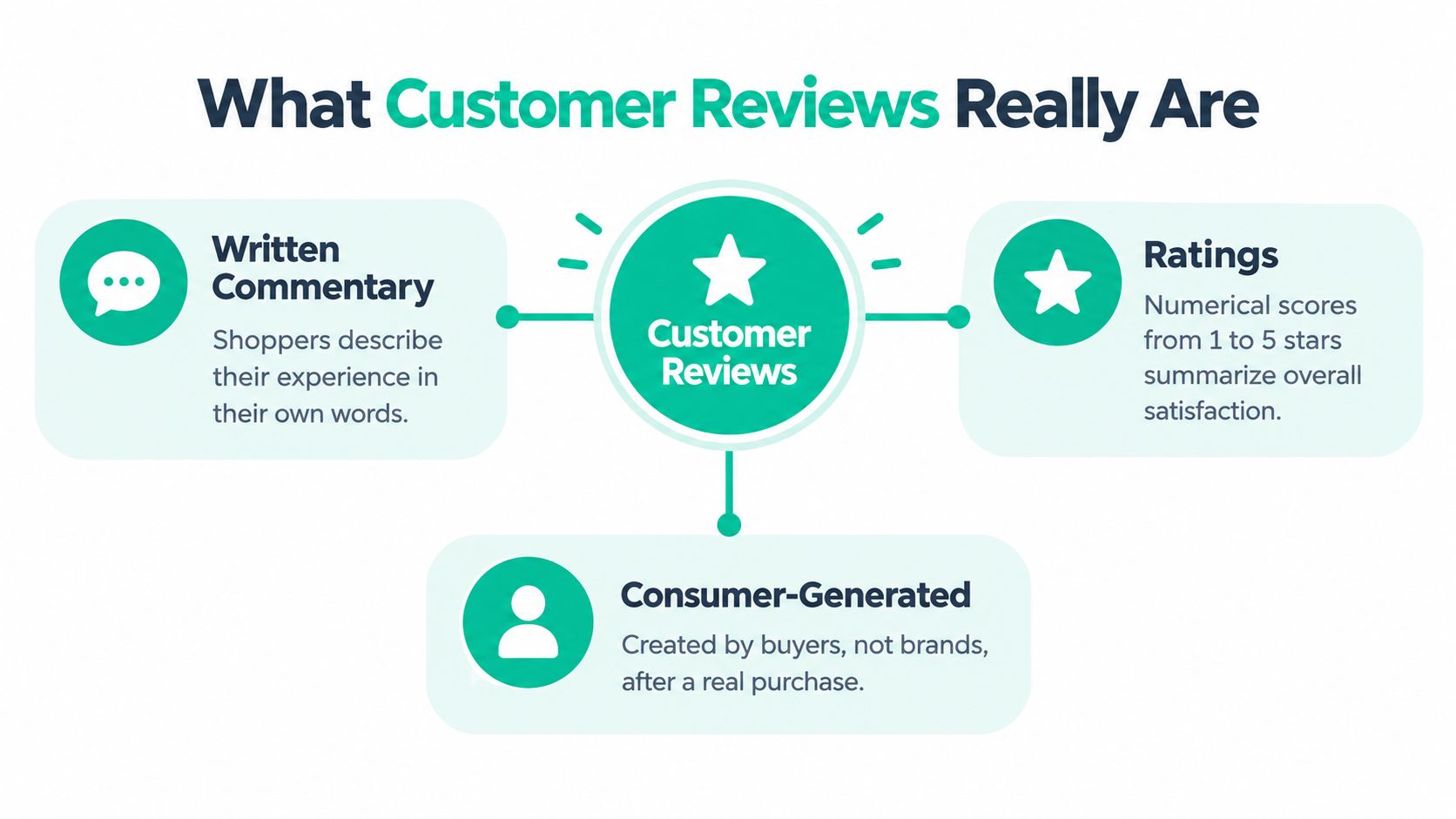
What customer reviews really are is simple once you strip away the jargon. They're buyer-made evaluations of a product, service, seller, or experience, usually with written comments and star ratings or scores, and they're visible to later shoppers who are trying to decide what to do next as defined in the review research. That modern format grew out of older expert criticism and became electronic word of mouth as online shopping, social platforms, and communication tools expanded in the late 1990s and early 2000s same research source.
For a busy owner, that means a review isn't just praise or criticism. It's a public account of someone else's experience, and it helps the next buyer judge risk without having to guess.
Table of Contents
- What Customer Reviews Really Are
- Why Reviews Build Trust and Drive Sales
- Main Types of Customer Reviews and Where They Live
- How to Read Reviews Like a Smart Shopper
- How to Collect More Honest Reviews the Right Way
- Real Examples of Great and Poor Review Responses
- Turn Customer Reviews Into Steady Growth
What Customer Reviews Really Are
A customer review is a buyer's account of what happened after a purchase or service visit. The seller does not write it, and that matters. A review sounds like one person explaining their experience in plain language, which is why shoppers often trust it more than polished brand copy.
A plumber, a dentist, and a Shopify store all get judged this way. A customer might write, “The delivery was late, but support fixed it fast.” That gives the next buyer something concrete to weigh, because it comes from experience, not brand control. A business line like, “We're the best in town,” does not do that work.
Why the format matters
Reviews usually pair written commentary with numeric ratings, like stars or scores as described in the review research. The number gives a quick signal. The words explain what led to it. A three-star review about shipping delays tells a very different story from a three-star review that says the product was fine but unexciting.
Practical rule: A review helps most when it sounds like a real customer describing a real outcome, not like marketing copy with a star added on top.
The pattern matters too. Buyers read for clues, not just totals. A steady stream of comments about slow delivery, careful packaging, or responsive support reveals more than a single high score. Consistent, honest collection and honest replies build that pattern into something people can trust.
Reviews also help later shoppers make sense of incomplete information, especially when they cannot touch the product, test the service, or compare every option in person. For small businesses, that makes reviews one of the clearest forms of social proof you can earn.
Why Reviews Build Trust and Drive Sales
A shopper who is deciding between two options often wants one simple thing, proof that the choice will work in real life. Reviews give that proof in a way brand copy cannot. They show a strength, point out a weakness, and hint at how a product or service performs after the sale.
The best reviews answer the questions buyers are already asking. Will it hold up? Will it arrive on time? If something goes wrong, will the business fix it? Reviews make those concerns visible before money changes hands.
Material purchases and experience purchases don't work the same way
A study in the Journal of Consumer Research looked at more than 6 million Amazon reviews and ran four laboratory experiments. It found that consumers were less likely to rely on reviews for experiential purchases, like activities or experiences, than for material purchases, because they saw reviews as less reflective of an experience's objective quality. In simple terms, reviews matter most when the buyer can compare clear features, such as fit, durability, or performance.
That helps explain why someone buying a cordless drill may read reviews carefully, while someone booking a vacation may treat reviews as only one input. A drill has specs and visible tradeoffs. A trip has a bigger personal element, so one person's opinion only goes so far.
Negative comments get extra attention
Negative reviews draw the eye quickly. A 2022 eye-tracking study on negative review attention found that 114 records showed greater attention to negative comments, 70% of those participants chose not to buy the mobile phone being evaluated, and among 101 non-purchase decisions, 80% of participants had focused more on negative comments. The research also found a statistically significant relationship between comment type, visual attention, and purchase decision, with p = 0.006.
That does not mean one bad review ends the sale. It means buyers use criticism to spot risk. If your reviews keep mentioning late arrivals, sizing confusion, or weak follow-up, people notice the pattern. Honest collection and honest replies help a business look more trustworthy than a perfect-looking page with no real depth.
For service businesses, how plumbers use local search and trust signals shows the same idea in practice. People often want proof before they pick up the phone.
Main Types of Customer Reviews and Where They Live
Different review places serve different jobs. A Google review can help a nearby shopper choose between two local options, while a marketplace review can help an online buyer compare products with almost the same listing copy. Social comments, industry sites, and testimonials on a business site all play different roles too.
A quick comparison
| Review place | Best for | Trust signal to watch |
|---|---|---|
| Google Business Profile | Local services, stores, appointments | Recent reviews, owner replies, location-specific details |
| Amazon, Etsy, or other marketplace pages | Products people can compare side by side | Verified-purchase labels, recurring complaints, photo reviews |
| Industry review sites | Software, agencies, professional services | Reviewer context, task fit, detailed explanations |
| Social comments and DMs | Real-time feedback and casual word of mouth | Unfiltered language, repeated themes, public follow-up |
| Testimonials on a brand site | Highlighting satisfied customers | Whether they feel selective or fully representative |
Google and marketplace reviews tend to carry more weight because they sit closer to the buying decision. They also come with signals like verified purchase labels, helpful votes, or public replies, which give readers more clues about credibility. Brand-controlled testimonials can still help, but shoppers usually treat them as weaker evidence because the business decides what gets shown.
Where small businesses should look first
A law firm may care most about Google reviews and legal directories. An auto repair shop may watch Google, Facebook, and local directory listings. An online retailer may live inside marketplace feedback, checkout emails, and product-page ratings.
A review on a third-party platform usually feels stronger to a buyer than praise sitting only on the business's own website.
That doesn't make owned testimonials worthless. It just means trust tends to rise when the proof comes from somewhere the seller can't fully control. If you sell through more than one channel, track the places your customers already check instead of trying to be everywhere at once.
How to Read Reviews Like a Smart Shopper
The mistake most readers make is counting stars first and reading details later. That's backward. A rating gives you the headline, but the wording tells you whether the review applies to your situation.
Start with context, not volume
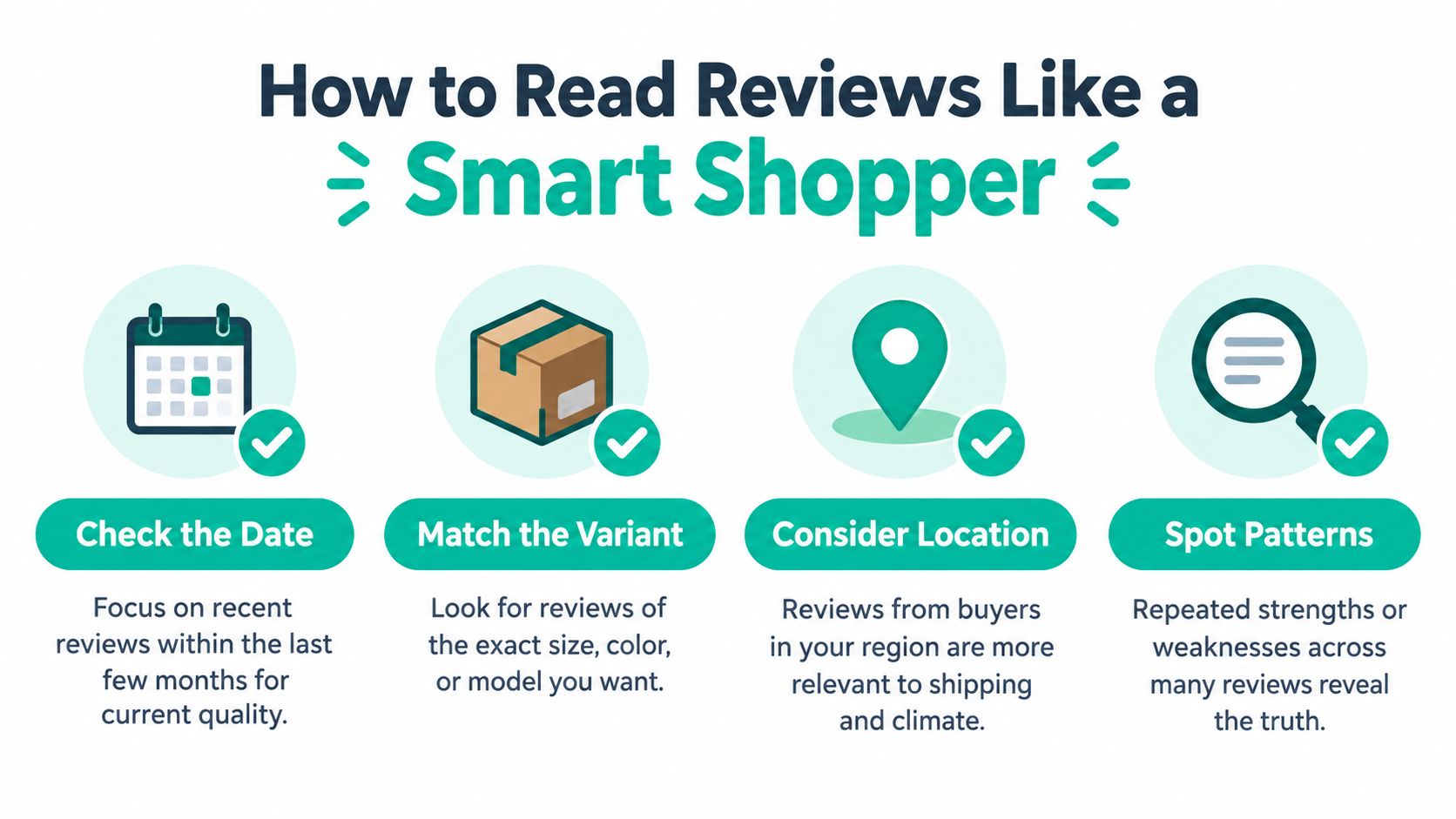
Check whether the review is recent. Then ask whether it describes the exact version, size, model, or service type you want. A glowing review for a small business website design package doesn't help much if you need custom e-commerce work. A bad review from three years ago may matter less than a smaller cluster of more recent comments with the same complaint.
A smart reader also looks at geography and use case. Shipping speed, weather-related wear, appointment reliability, and local service quality can vary by region. If three reviews from the same city mention the same delay, that pattern is more useful than one five-star rating with no detail.
Read for patterns and responses
The 2024 study on review helpfulness found that review-information quality, the reviewer's credibility, the reader's attitude toward the information, and how well the review fits the reader's task all significantly affect perceived helpfulness 2024 study on review usefulness. That's a useful reminder that helpful reviews are not just positive or negative, they're relevant.
Look for what repeats. If several buyers mention sizing problems, scheduling issues, or warranty confusion, that's a clue about how the business operates. Also check the owner's response. A reply that shows investigation and a fix tells you more than a generic “sorry for your experience” ever will.
Smart reading habit: Read three to five reviews in a row, not one at a time. Patterns show up fast when you compare similar complaints side by side.
If you're a business owner reading reviews of your own company, this same habit helps you spot operational leaks. The comments may point to slow follow-up, unclear pricing, poor fit guidance, or missed handoffs long before those issues show up in revenue.
How to Collect More Honest Reviews the Right Way
Good review collection starts with a real customer experience. If someone never used the product or service, that feedback doesn't belong in the system. The U.S. Federal Trade Commission's final rule, effective October 21, 2024, prohibits creating, selling, purchasing, or disseminating fake reviews, including reviews from nonexistent people or people who did not use the product. It also restricts undisclosed insider reviews, review suppression, and compensation tied to a particular sentiment FTC final rule.
Keep the ask simple and honest
Ask for the review without scripting the answer. That means you can request feedback after a purchase, appointment, or completed project, but you shouldn't tell customers to leave only praise. A straight request like “Would you share your experience?” respects the customer and keeps the review more credible.
If you offer incentives, make sure the incentive is for participation, not for a positive opinion. That difference matters. It also helps to explain where the review will appear and whether it may be public, because people are more likely to respond when they know how the process works.
Preserve the full picture
Don't hide negative feedback just because it stings. A few rough reviews can make the rest of the profile feel real. If a complaint violates platform policy, handle it through the platform. If it's just inconvenient, leave it visible and respond with specifics.
Honest collection is not about chasing perfect scores. It's about showing that real customers had real experiences.
That approach also protects local businesses and e-commerce brands from looking manipulative. The FTC's rule makes the risk clearer, but the trust issue existed before the rule did. Shoppers can tell when a profile feels staged.
Real Examples of Great and Poor Review Responses
A reply is public proof. Future customers read it and decide whether your business listens, solves problems, or hides behind canned language. That's why a response can help rebuild trust, even when the original review is rough.

What a strong reply looks like
If a customer leaves a happy review, a good response is short, specific, and human. Try something like, “Thanks for the kind words, and I'm glad the sizing guide helped you choose the right fit.” That says you read the review and noticed the detail that mattered.
For a complaint, the best reply names the issue, acknowledges it, and gives a next step. A useful version might be, “I'm sorry the appointment ran late. We checked the schedule and found a gap in our routing, and we've already adjusted the booking process to prevent that from happening again.” That kind of answer shows investigation, not just regret.
What weak replies sound like
A weak response stays vague. “Sorry for the inconvenience” doesn't tell a new buyer anything. Neither does arguing with the customer in public. If the review is unfair or exaggerated, stay calm and answer with facts, not attitude.
This guide on suppressing negative search results is useful for businesses that also need to think about broader reputation cleanup, but the review reply itself should still stay honest and visible.
The FTC rule also covers more than fake five-star ratings. It prohibits buying positive or negative reviews, using undisclosed reviews from employees or relatives, operating a company-controlled review website that falsely appears independent, and suppressing reviews by misleadingly removing or withholding negative feedback FTC rule overview.
Turn Customer Reviews Into Steady Growth
Customer reviews work best when you treat them as both experience evidence and decision support. They help shoppers judge risk, and they help you spot the friction points that slow sales. That's why the smartest businesses don't just collect reviews, they read them, respond to them, and use them in marketing.
A simple routine goes a long way. Watch one main platform closely, ask every satisfied customer in a consistent way, reply to both praise and criticism, and reuse real feedback in your site copy, ads, and sales pages. If you want a useful framework for connecting those touchpoints, this overview of marketing funnels is a solid place to think about where review proof fits.
Start small this week. Pick one platform, fix one response pattern, and make one honest ask for feedback after the next completed job or delivery. Then keep going, because steady review habits build stronger trust than a sudden burst of stars ever will.
If you want help turning reviews into more calls, more clicks, and more qualified leads, Assertive Agency can help with review strategy, reputation cleanup, SEO, and conversion-focused marketing. Visit Assertive Agency to see how their team supports businesses that want stronger trust signals and better results online.