


In today’s digital-first economy, your website is the front door to your business. Whether you run a local service company, an e-commerce platform, or a global enterprise, your potential customers are actively searching online for solutions to their problems. However, simply having a visually appealing website does not guarantee that those customers will find you. If your platform isn’t optimized for search engines, your competitors will consistently outrank you and capture valuable market share.
This is where a seo audit comes into play. Just as a physical property requires regular structural inspections or an business needs routine financial reviews, your website requires a comprehensive technical and structural evaluation to perform at its peak.
In this ultimate guide, we will break down what a seo audit is, why it is an indispensable growth engine for modern organizations, the core components that make up a successful evaluation, and how to execute a strategy that drives real revenue.
Understanding the Core: What is an SEO Audit?
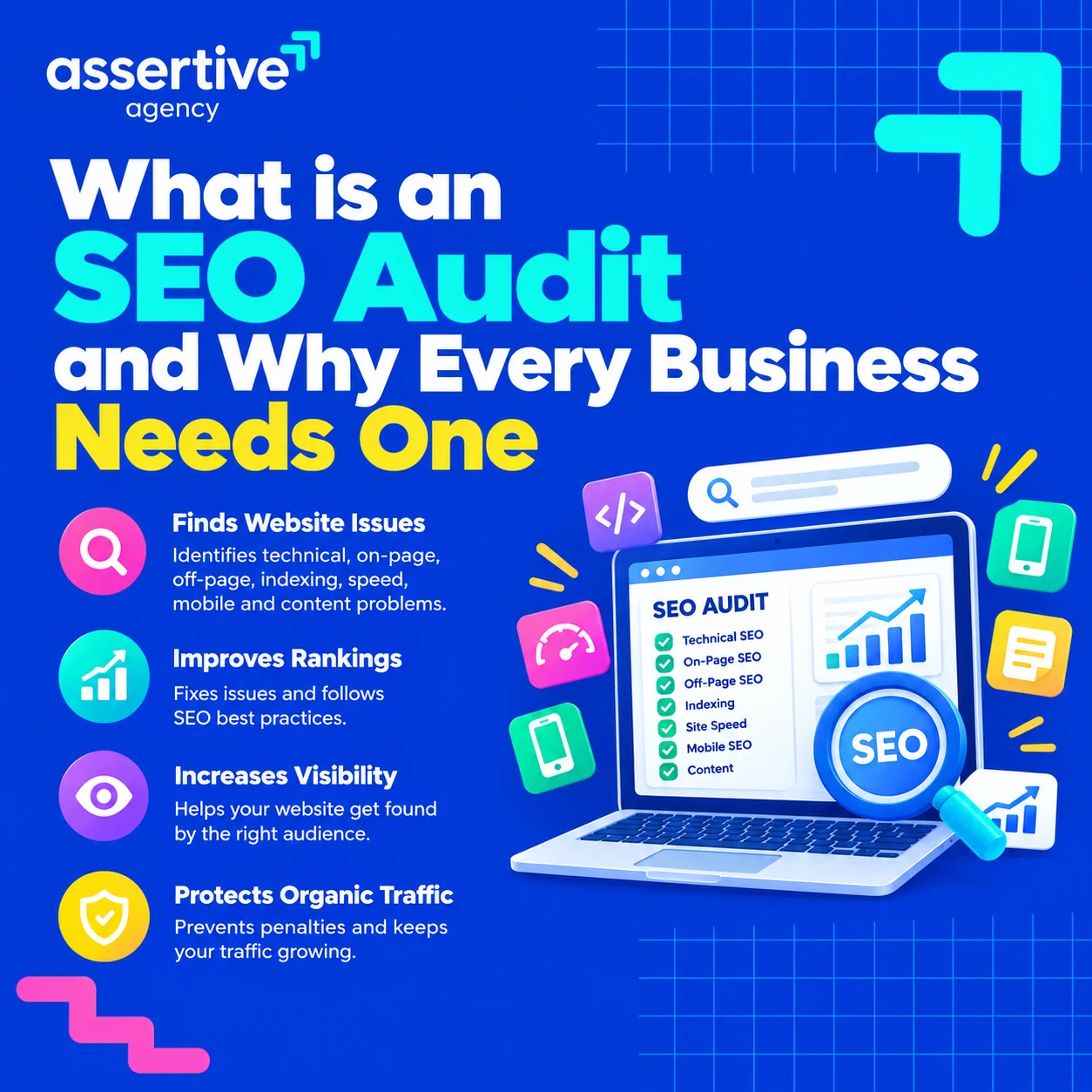
At its most fundamental level, a seo audit is a comprehensive analysis of a website’s overall health, structure, and search engine readiness. Think of it as a full-body checkup conducted by a specialist, designed to uncover hidden issues, technical bugs, and missed opportunities that prevent a website from ranking higher on Search Engine Results Pages (SERPs).
A thorough seo audit evaluates a digital property across three primary pillars:
-
Technical Health: How search engine crawlers discover, index, and render your web pages.
-
On-Page & Structural Optimization: The quality, relevance, and semantic organization of your content and HTML code.
-
Off-Page Authority: The external reputation, backlink profile, and domain trust your site has built across the web.
Unlike a casual surface-level review, an effective seo audit relies on data-driven diagnostics. It isolates the exact barriers blocking search engine algorithms—like Google, Bing, or DuckDuckGo—from understanding, indexing, and favoring your pages.
Why Every Business Needs an SEO Audit
Many business owners assume that once a website is launched and initial optimization is complete, the work is done. However, search engine algorithms evolve thousands of times per year, web standards change, and website code naturally degrades over time (a phenomenon known as code bloat or technical debt).
Here is why conducting a regular seo audit is essential for business sustainability and growth:
1. Search Engine Algorithms Evolve Constantly
Search engines regularly update their ranking algorithms to deliver better, more relevant experiences to human users. Major updates focus on core quality metrics, page speed standards, machine learning interpretation, and natural language processing. A site that performed exceptionally well two years ago may now be actively penalized under current standards. A seo audit ensures your business stays fully aligned with modern algorithmic expectations.
2. Identifying and Fixing Hidden Technical Errors
Websites are dynamic, complex systems. Minor updates, plugin installations, content migrations, or redesigns can inadvertently introduce critical errors. Broken links, duplicate content, crawl loops, unindexed pages, and misconfigured canonical tags can silently destroy organic visibility. Running an seo audit brings these invisible errors to light before they permanently damage your traffic.
3. Maximizing Return on Investment (ROI)
Acquiring paid traffic through digital advertising (PPC) is becoming increasingly expensive due to rising ad costs and competitive bidding. Organic search remains one of the highest-ROI acquisition channels available. By running a seo audit to remove search barriers, you maximize the efficiency of your existing website content, allowing you to capture high-intent organic traffic without increasing your ad spend.
4. Improving User Experience (UX) and Conversion Rates
Search engine optimization is no longer just about satisfying algorithms; it is inherently tied to satisfying real people. Core metrics like mobile responsiveness, page loading speed, clear navigation, and semantic content layout directly influence how long users remain on your site. Resolving issues flagged during a seo audit creates a faster, smoother experience for visitors, directly increasing conversion rates and revenue.
Key Pillars of a Comprehensive SEO Audit
To execute an actionable, semantic evaluation, you must divide the process into specialized modules. A complete seo audit covers three core domains:
Technical SEO Audit
Technical search engine optimization forms the foundation of your digital strategy. If search engines cannot efficiently crawl or index your site, no amount of quality content will help you rank.
-
Crawlability and Indexability: Evaluating your
robots.txtfile, XML sitemaps, and server response codes (200, 301, 404, 500) to ensure search engine spiders can discover and index your high-value pages without hitting roadblocks. -
Site Speed and Core Web Vitals: Measuring key performance metrics like Largest Contentful Paint (LCP), Interaction to Next Paint (INP), and Cumulative Layout Shift (CLS). Slow websites bounce users quickly and are penalized by search algorithms.
-
Mobile Responsiveness: Confirming that your site renders flawlessly across all screen sizes and mobile operating systems, maintaining mobile-first indexing standards.
-
Site Architecture and URL Structure: Ensuring a logical hierarchy with clear category structures, clean URLs, and minimal click-depth (users should reach key pages within 3 clicks from the homepage).
On-Page and Content Audit
Content is how you communicate value to both search engines and potential buyers. An on-page seo audit assesses whether your pages target the right search intent and present structured, authoritative information.
-
Keyword & Search Intent Alignment: Checking if target keywords reflect actual search intent (informational, commercial, navigational, or transactional) rather than just keyword stuffing.
-
Title Tags, Meta Descriptions, and Headings: Reviewing HTML title tags, meta descriptions, and structural heading tags (
H1,H2,H3) for accuracy, brand consistency, and keyword placement. -
Semantic Content Quality & Depth: Analyzing existing content for readability, depth, and topical authority. Removing thin content, fixing duplicate content issues, and ensuring contextually rich terminology is used naturally.
-
Internal Linking Architecture: Ensuring strategically important hub pages receive internal link equity from supporting contextual blog posts and product pages.
Off-Page and Backlink Audit
Off-page signals dictate how much domain trust and authority your website commands across the broader web.
-
Backlink Profile Analysis: Auditing the quantity and quality of external websites linking back to your domain. Identifying toxic, spammy, or unnatural links that could invite algorithmic penalties.
-
Anchor Text Diversity: Ensuring anchor text distributions appear natural and aren’t over-optimized around exact-match keywords.
-
Competitor Link Gap Analysis: Uncovering high-authority sites that link to your direct competitors but not to you, highlighting outreach opportunities.
Step-by-Step Guide: How to Execute an SEO Audit
Performing a comprehensive audit requires a structured approach. Below is a step-by-step framework to follow:
| Step | Action Item | Core Focus Area | Primary Goal |
| 01 | Crawl the Entire Website | Technical Discovery | Map all URLs, broken links, and site architecture errors. |
| 02 | Review Search Console Data | Indexation & Health | Identify manual actions, coverage errors, and index status. |
| 03 | Measure Page Speed & Vitals | User Experience | Benchmark Core Web Vitals and optimize rendering speed. |
| 04 | Evaluate On-Page Structure | Content Optimization | Fix missing metadata, poor heading tags, and thin content. |
| 05 | Audit Backlink Profile | Domain Trust & Authority | Disavow toxic links and identify fresh link-building opportunities. |
1. Crawl Your Site Using Automated Tools
Begin by running a complete site crawl using specialized software (such as Screaming Frog, Ahrefs, Semrush, or Google Search Console). This generates an inventory of all existing URLs, image assets, scripts, and links.
2. Identify Indexation and Visibility Blockers
Cross-reference your crawl data with Google Search Console. Look for pages flagged as “Crawled – currently not indexed” or “Discovered – currently not indexed.” Resolve redirect chains, duplicate canonical declarations, and conflicting noindex tags.
3. Analyze Site Speed and Performance
Run representative key pages (homepage, service pages, top landing pages) through performance tools. Optimize heavy imagery, leverage modern formats (WebP/AVIF), minify CSS/JS, and implement caching mechanisms to boost page load times.
4. Optimize Content and Metadata
Identify underperforming pages with high impressions but low click-through rates (CTR). Rewrite meta titles and descriptions to make them more compelling. Add structured data schema markup (Organization, Product, Article, FAQ) to help search engines generate rich snippets in organic search results.
5. Create an Actionable Prioritization Matrix
An audit often yields dozens of findings. Prioritize them based on effort versus impact:
High Impact / Low Effort: Fix immediate technical blockers (e.g., broken sitemaps, unindexed core pages, broken internal links).
High Impact / High Effort: Overhaul site architecture, rewrite thin content clusters, and improve mobile Core Web Vitals.
Low Impact / Low Effort: Update older meta descriptions and clean up low-traffic 404 pages.
Low Impact / High Effort: Minor redesigns of low-converting, deep-level utility pages.
How Often Should You Conduct an SEO Audit?
The frequency of your audit depends heavily on the scale, complexity, and dynamic nature of your platform:
-
Enterprise & High-Volume E-Commerce Sites: Conduct a mini technical seo audit monthly, with a comprehensive evaluation every quarter. With thousands of product URLs, facets, and automated updates, issues accumulate rapidly.
-
Small-to-Medium Business (SMB) Sites: Perform a complete seo audit twice a year or whenever planning a site redesign, content overhaul, or major product launching campaign.
-
Niche Blogs & Local Businesses: An annual or bi-annual audit is generally sufficient to catch technical decay, update outdated information, and stay aligned with search guidelines.
Frequently Asked Questions (FAQs)
1. What is the difference between a manual SEO audit and an automated one?
An automated audit relies solely on software tools to scan a website and flag programmatic errors like missing tags or broken links. A manual seo audit is conducted by an experienced strategist who analyzes the data, considers business goals, evaluates user intent, inspects competitive dynamics, and provides tailored, prioritized recommendations that automated tools cannot infer.
2. How long does it take to see results after fixing audit findings?
The timeframe varies depending on the severity of the issues fixed, your domain’s existing authority, and how frequently search engines crawl your site. Technical fixes (such as fixing indexation blockers or broken canonicals) can show positive movement in as little as 1 to 3 weeks. Structural content overhauls and authority improvements generally show significant impact within 2 to 4 months.
3. Will an SEO audit guarantee first-page rankings on Google?
No reputable digital marketer can guarantee a #1 position on search engines because algorithms consider hundreds of dynamic variables, including real-time competitor actions. However, executing a thorough seo audit removes structural penalties, optimizes your content for search intent, and creates the ideal conditions for your website to compete for high-value top rankings.
4. How much does a professional SEO audit cost?
The cost of an audit varies based on website size, technical complexity, and depth of analysis. For small local business websites, a professional audit typically ranges between $500 and $2,000. For large e-commerce platforms, multi-language websites, or enterprise domains with tens of thousands of pages, a detailed audit usually costs between $3,000 and $10,000+.
5. Should I perform an SEO audit before redesigning my website?
Yes, absolutely. Performing an audit before a site redesign is critical to protect your existing search visibility. It allows you to map existing top-performing URLs, preserve link equity via proper 301 redirect mapping, retain high-ranking content structures, and ensure that new design elements do not introduce site speed or mobile usability regressions.
