


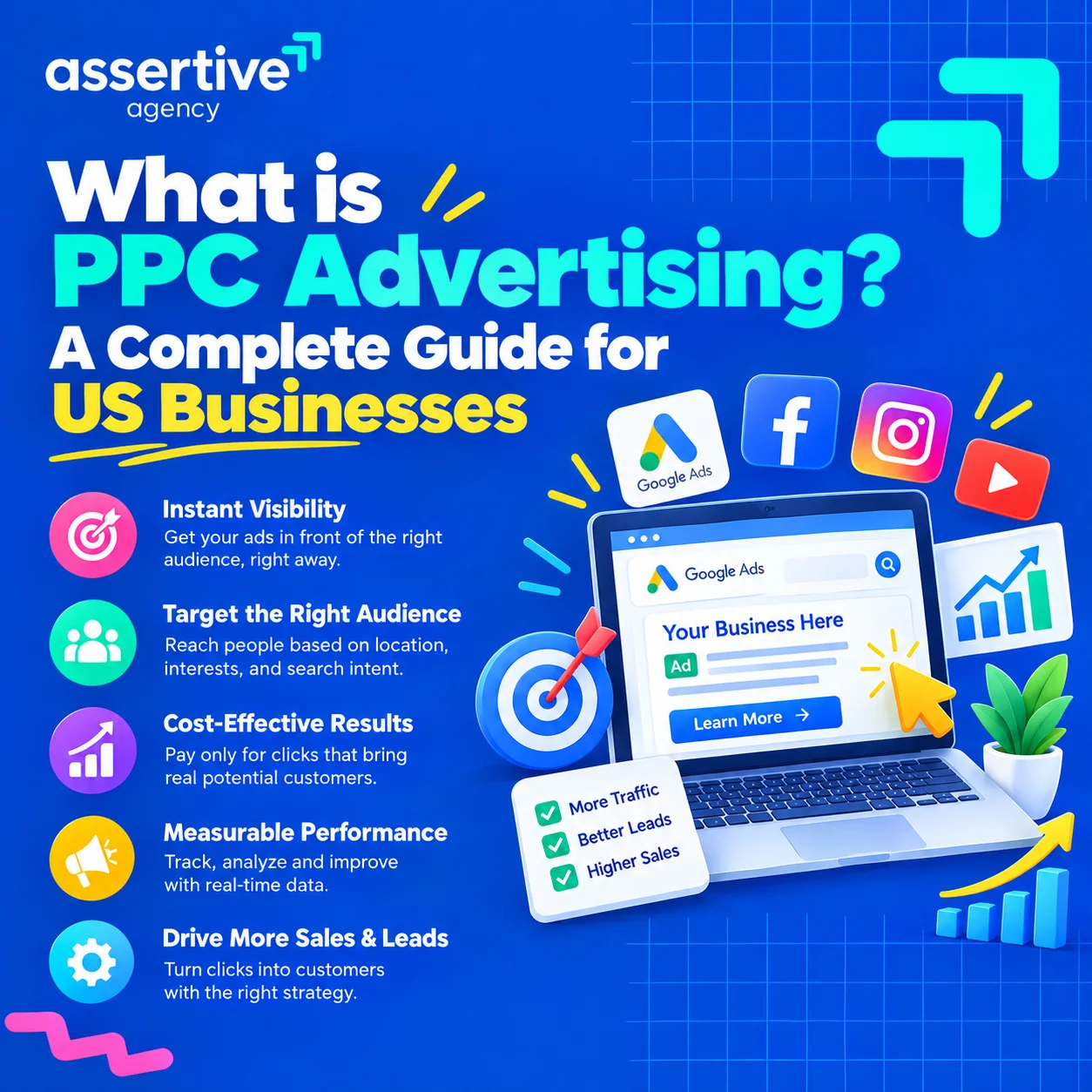
what is PPC (pay-per-click advertising) is an online advertising model where advertisers pay a publisher each time someone clicks an ad. The publisher is usually a search engine or a social platform, and the fee is the cost per click (CPC). A $3 click that ends in a $300 sale is a bargain. A $3 click that ends in a bounce is just a bill.
Google Ads runs the largest PPC platform, and Google handles more than 99,000 searches every second, according to Search Engine Land. Microsoft Advertising, Meta, TikTok, and LinkedIn sell clicks too. Search Engine Land also reports that PPC returned an average of $2 for every $1 spent in 2022, at an average CPC of $1.16. Those averages hide wide gaps between industries, and between well-run accounts and neglected ones.
Every campaign rests on four moving parts: keywords, bids, Quality Score, and landing pages. Google’s auction blends them into Ad Rank, which decides who appears and what each click costs. Ads come as search, display, shopping, video, and remarketing formats, and each one reaches buyers at a different stage.
So what is PPC advertising, and does it suit a US small business? This guide covers how pay-per-click works, how the auction picks winners, the main ad types, the leading platforms, how PPC compares with SEO and SEM, what it costs, and how to launch a first campaign. The FAQ at the end answers the questions business owners ask most.
What Is PPC and How Does Pay-Per-Click Work?
Pay-per-click works as a bidding system. You pick keywords, set a maximum bid for each, and write an ad. When someone searches a matching query, the platform enters your ad into an auction. You pay only if that person clicks. An impression alone costs nothing.
Setup follows five steps on most platforms:
- Choose a campaign type that matches your goal, such as leads, sales, or awareness.
- Set targeting by location, device, audience, and schedule.
- Enter a daily budget and a bidding strategy.
- Add a destination URL, ideally a dedicated landing page.
- Build the ad copy and creative.
Once the ad goes live, the platform decides where it appears and what you pay. It weighs your bid, your budget, and how relevant the ad is to the search. Platforms want happy users, so they reward relevant advertisers with higher positions and lower prices. That reward system runs through Quality Score, which drives the Google Ads auction.
How the Google Ads Auction Works: Ad Rank, Quality Score and CPC
Google runs an auction every time someone searches. Each ad gets scored before Google decides who shows. The score, called Ad Rank, combines your maximum bid with your Quality Score. Quality Score rates an ad from 1 to 10 using three inputs: expected click-through rate, ad relevance to the keyword, and landing page experience.
The highest bidder doesn’t always win. A $2 bid with a Quality Score of 9 can outrank a $4 bid with a Quality Score of 3. Your actual CPC also lands below your maximum bid, because you pay only enough to hold your position over the advertiser beneath you.
Three habits lower cost per click over time:
- Tighten keyword groups so each ad matches its search term.
- Write headlines that echo the query and earn the click.
- Match each landing page to the promise in its ad.
A sharper ad earns a higher click-through rate, and a higher click-through rate lifts Quality Score. Next, look at what those ads are.
Types of PPC Ads
PPC ads come in five main formats, and each one meets buyers at a different moment.
- Search ads appear above organic listings when someone types a matching keyword. They carry the strongest buying intent.
- Display ads place banner and image creatives across websites and apps. They build awareness and often bill per thousand impressions (CPM).
- Shopping ads show a product photo, price, and store name inside Google results. They need a Merchant Center product feed.
- Video ads run on YouTube as skippable, non-skippable, or six-second bumper formats. Skippable ads can stretch to 60 seconds.
- Remarketing ads follow past website visitors with a reminder to return. They target people who already know your brand.
Google also sells Performance Max and Local Services Ads, which bundle several formats into one campaign. Social platforms add sponsored feed posts, Stories, and Reels. Which platform runs them is the next decision.
Top PPC Platforms for US Businesses
Google leads the market. Search Engine Land reports that 40% of 2020 ad spend went to search, and Google took 73% of that share. Four other platforms matter for most US advertisers:
- Google Ads covers search, display, shopping, and YouTube.
- Microsoft Advertising serves ads on Bing and its partner network.
- Meta Ads places ads in Facebook and Instagram feeds, Stories, and Reels.
- TikTok Ads runs in-feed video ads inside the app.
- LinkedIn Ads targets by job title, company size, and industry, which suits B2B.
Platform choice depends on intent. Search platforms catch people ready to buy, while social platforms create interest before the search happens.
PPC vs SEO vs SEM
People mix up PPC, SEO, and SEM, but the three aren’t interchangeable. SEM (search engine marketing) is the umbrella term. It covers paid search (PPC) and organic optimization (SEO). PPC buys visibility one click at a time. SEO earns it through content, technical health, and backlinks, with no fee per visit.
Speed separates them. Platforms usually approve ads the same day, so PPC traffic can start within 24 to 48 hours. SEO typically needs three to six months before rankings move. PPC also stops when the budget stops, while SEO keeps compounding.
Most US businesses run both. PPC covers the wait and shows which keywords bring paying customers. SEO then targets those same phrases. Budget is the natural follow-up question.
PPC Costs and Benefits
Cost per click varies by keyword, industry, and competition. Legal, insurance, and finance keywords often cost far more than the $1.16 average. Ad spend goes to the platform. Management fees go to whoever runs the account, and they’re a separate line. Assertive Agency’s PPC management starts at $159 per month, with pricing tied to ad spend and campaign complexity.
Five benefits explain why PPC stays popular:
- Speed: campaigns bring traffic within days, not months.
- Control: you set the budget, locations, and schedule.
- Measurement: Google Analytics tracks conversions and return on investment.
- Targeting: audiences split by demographics, interests, and behavior.
- Reach: even unclicked ads build brand recall.
PPC has limits too. Costs climb in crowded markets, traffic ends when spending ends, and weak tracking hides waste. Weak tracking and loose targeting cause most of the damage.
Common PPC Mistakes That Waste Ad Budget
Beginners who ask what is PPC often assume clicks equal customers. They don’t. Four mistakes drain budgets fastest:
- Skipping negative keywords, so ads trigger on irrelevant searches.
- Sending every click to the homepage instead of a matched landing page.
- Running campaigns without conversion tracking, so nobody knows which keywords produce leads.
- Setting bids once and never reviewing the search terms report.
Watch four numbers to catch these early: cost per click, cost per lead, conversion rate, and return on ad spend (ROAS). A rising cost per lead with a flat conversion rate points to a traffic problem. A falling conversion rate with steady traffic points to the landing page. Each mistake has a fix, and the fixes fit into a simple launch routine.
How to Start a PPC Campaign
A first campaign takes seven steps:
- Define one goal, such as leads, calls, or sales, plus a target cost per lead.
- Research keywords in Google Keyword Planner, mixing high-volume terms with long-tail phrases.
- Add negative keywords to block irrelevant searches.
- Group tightly related keywords into ad groups with matching ads.
- Build landing pages that repeat the ad’s promise and show one clear call to action. A landing page mistakes checklist helps here.
- Install conversion tracking through Google Analytics 4 before spending a dollar.
- Review the search terms report weekly and adjust bids.
Expect the first two to four weeks to work as a data-gathering phase. Results stabilize once the platform learns which searches convert. If you’d rather hand the setup to specialists, Assertive Agency’s PPC management services begin with a free audit and skip long-term lock-ins.
Frequently Asked Questions
What does PPC stand for?
PPC stands for pay-per-click. Advertisers pay a fee each time someone clicks an ad, so they buy visits to a website, landing page, or app instead of buying impressions.
Is PPC the same as Google Ads?
No. PPC is the advertising model, and Google Ads is one platform that uses it. Microsoft Advertising, Meta Ads, TikTok Ads, and LinkedIn Ads run PPC campaigns as well.
Do you pay when nobody clicks your ad?
No. On click-based bidding you pay only when someone clicks. Some display and social campaigns bill per thousand impressions instead, so check the bidding type before launch.
How much does PPC advertising cost for a small business?
Costs depend on keywords and competition, and they split into ad spend and management fees. Your daily budget caps ad spend. Agency management starts around $159 per month at Assertive Agency.
How long does PPC take to show results?
Traffic arrives within 24 to 48 hours of launch. Stable, profitable performance usually follows after two to four weeks of optimization, once search term data accumulates.
Which businesses benefit most from PPC?
Service providers, e-commerce stores, healthcare clinics, real estate agents, education providers, and startups benefit most. Each sells to people who already search for what they offer.
Should I start with PPC or SEO?
Start with PPC when you need leads within days. Start with SEO when budget is tight and you can wait months. Winning PPC keywords also feed the SEO plan.
Is Google Ads or Facebook Ads better for small businesses?
Google Ads wins for capturing buyers who are already searching. Facebook Ads win for building interest through audience targeting. Choose search for ready-to-buy customers and social for awareness and retargeting.
Can a small business run PPC on a limited budget?
Yes. Set a daily cap, bid on long-tail keywords, and add negative keywords to block wasted clicks. Long-tail phrases cost less because fewer advertisers bid on them.
Do I need a landing page for PPC?
Yes, for most campaigns. A dedicated landing page that matches the ad lifts conversion rates and Quality Score, which then lowers cost per click.
What is PPC management, and do I need it?
PPC management is the ongoing work of running paid campaigns: keyword research, ad copy, bidding, conversion tracking, and reporting. Self-management works for small budgets if you review the account weekly. Agencies help when campaigns span several platforms or wasted spend keeps climbing.
Final Thoughts
So, what is PPC? An online advertising model where you pay a publisher each time someone clicks, with an auction that weighs your bid against Quality Score. Search, display, shopping, video, and remarketing ads run across Google Ads, Microsoft Advertising, Meta, TikTok, and LinkedIn. PPC brings speed while SEO brings compounding rankings, and SEM covers both. Tight keyword groups, matched landing pages, and conversion tracking keep cost per click under control, and a weekly review keeps waste out.
Want a specialist to audit your account or launch your first campaign? Assertive Agency offers a free PPC audit. Call +1 (848) 236-8092 or book through the contact page.
